

In his latest blog, our CEO discusses the value of a nurse-led model that works not just for families but the wider health system too.

Gareth’s blog: why nurse-led children’s hospice care matters more than ever
Gareth’s blog: Why nurse-led children’s hospice care matters more than ever
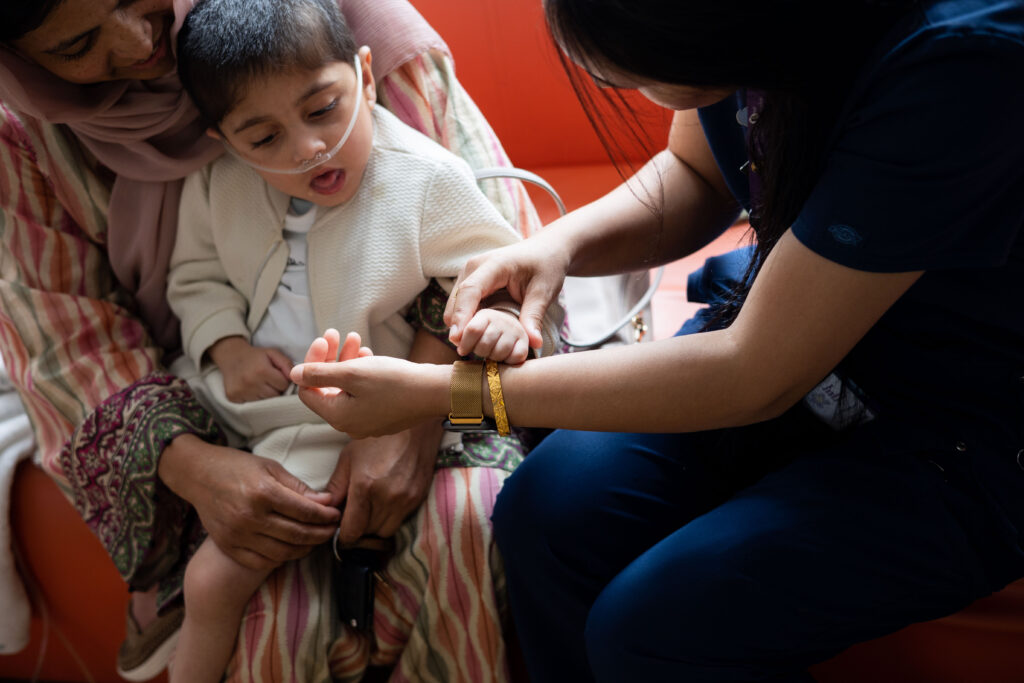
If you talk to any parent we support at Forget Me Not, they won’t describe a service.
They’ll describe a relationship.
They’ll talk about the nurse who knows their child’s subtle changes before anyone else. The conversation that happens at just the right time. The reassurance that someone is always there.
From day one, our care has been led by highly experienced, specialist children’s palliative care nurses. Practitioners who understand not just the clinical complexity of each child’s condition, but the emotional and practical reality of life for the whole family. And who have the time to really get to know the child and their family, building trusted relationships and continuity over time.
From day one, our care has been led by highly experienced, specialist children’s palliative care nurses. Practitioners who understand not just the clinical complexity of each child’s condition, but the emotional and practical reality of life for the whole family.
Gareth Pierce, CEO
Over the last 12 months, we’ve taken another important step forward.
We’ve looked hard at how our care, therapy and family support services connect, and we’ve reshaped them so that they work together as one holistic model of care and support for families.
Because the reality for families caring for a child with a life-shortening condition is often complex and, at times, chaotic. They’re navigating multiple healthcare services, managing clinical issues alongside emotional and practical challenges, and trying to hold family life together in incredibly difficult circumstances.
So we’ve designed our support around that reality. Every family who comes to us receives a holistic assessment, not just of clinical need, but of their wider situation. And from that, we design a bespoke package of care and support, tailored to each family, because no two families are the same.
One of the most important developments has been the introduction of link workers to help families navigate and coordinate the complexity they face every day. They act as a consistent point of contact, helping to co-ordinate support across services, both within Forget Me Not and externally. In doing so, they help to reduce the burden on families of having to manage everything themselves.
It’s a model that works, for families and for the system. Nurse-led, holistic care that helps ensure that families receive faster, more responsive support so that issues are managed earlier, before they become crises. This means unnecessary hospital visits can be avoided and pressure on the wider system is reduced.
This is what good care should look like – but it’s also what a sustainable system needs.
The direction of travel for the NHS is clear – more care delivered in communities, better integration, and smarter use of clinical expertise. This is where children’s hospices have something important to offer.
Gareth Pierce, CEO
The direction of travel for the NHS is clear – more care delivered in communities, better integration, and smarter use of clinical expertise. This is where children’s hospices have something important to offer.
The opportunity now is to lean into that experience. To learn from it, to support it to grow and to embed it more fully across the system. But doing that requires the right kind of thinking about funding – not short term fixes, but considered, long-term investment in models of care that work.
We are incredibly proud of what our teams are doing at Forget Me Not, but we’re not finished.
We want to extend our reach further into communities as well as strengthen partnerships across the system, building on this joined-up model of care and support.
Because when we get this right, we don’t just improve hospice care – we strengthen the whole system around children and families. But most importantly, we want every family to feel that everything around them, every layer of care and support works together, seamlessly. Because at its heart, this is not about models, structures, or systems – it’s about children and families and the moments that matter most.
We want every family to feel that everything around them, every layer of care and support works together, seamlessly. Because at its heart, this is not about models, structures, or systems – it’s about children and families and the moments that matter most.
Gareth Pierce, CEO

Sign up to hear about news, events and opportunities from Forget Me Not Children’s Hospice
Want to receive our monthly e-newsletter, full of stories, news, events, opportunities and more? Then sign up today!